

23 Aug What Does Laughing Gas Feel Like at the Dentist? | Sand Springs, OK
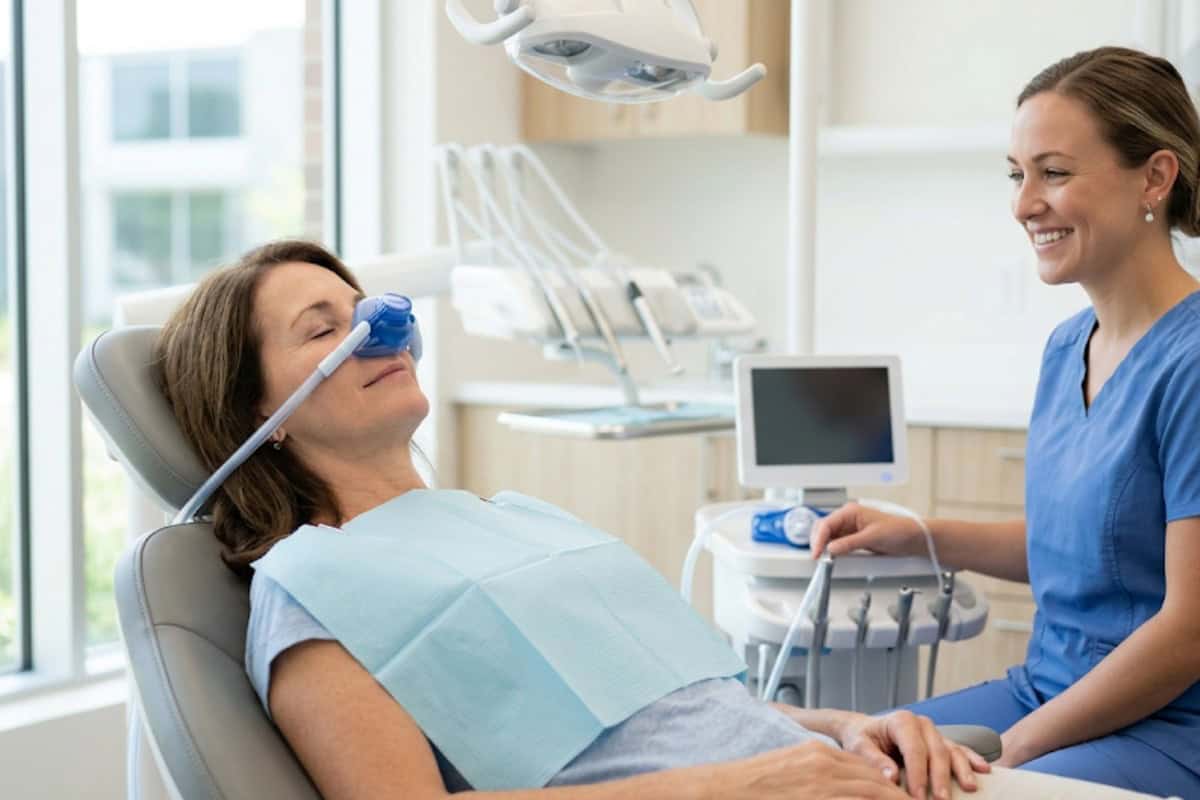
A patient sits back in the chair, a small mask settles over the nose instead of the mouth, and within three to five minutes the tight grip on the armrest starts to loosen without any conscious decision to relax. That is the actual experience most people describe when they ask what does laughing gas feel like at the dentist, and it rarely matches the nervous expectation people walk in with. Nitrous oxide, the gas behind the nickname, produces a light, floaty, mildly euphoric feeling rather than anything dramatic or disorienting.
Nitrous oxide is inhaled through a small nasal mask, mixed with oxygen, and it takes effect within a few minutes of normal breathing. According to nitrous oxide effects described by the Cleveland Clinic, patients commonly report feeling mildly euphoric, light-headed, and a tingling sensation in the arms and legs, sometimes paired with a sense of heaviness, like sinking slightly deeper into the chair. Despite the nickname, it does not reliably make people laugh, though a giggle here and there is not unusual either.
The Sensation Broken Down Step by Step
The mask goes on first, and the dentist starts with a low concentration of gas before adjusting it up to the level that produces noticeable calm. Most patients notice the first effects within three to five minutes: a lightness in the limbs, a slight tingling sensation, and a mental shift where the sounds and sights of the dental office feel less urgent and less overwhelming. Time can also feel compressed, so a thirty-minute procedure might feel like it lasted only a few minutes once the mask comes off. An anxiety sedation review of recent dental sedation research found nitrous oxide worked particularly well for mild to moderate anxiety, with a fast onset and a low rate of complications compared to other sedation methods.
Why It Wears Off So Quickly
Once the procedure is finished, the dentist switches the mask over to pure oxygen for a few minutes. That step flushes the nitrous oxide out of the bloodstream quickly, since a reference on nitrous oxide pharmacology notes the gas is eliminated almost entirely through the lungs with only a trace metabolized by the body. Most patients feel back to their normal baseline within five to ten minutes. There is no lingering grogginess the way there often is with sedation that involves a pill or an IV, which is part of why nitrous oxide remains one of the most commonly used sedation options for both routine cleanings and more involved procedures.
| Sedation Level | What It Feels Like | Recovery Time |
|---|---|---|
| Nitrous oxide (laughing gas) | Light, floaty, mildly euphoric; fully conscious and responsive | 5 to 10 minutes |
| Oral conscious sedation | Drowsy, relaxed, may not remember parts of the visit | Several hours; driver required |
| IV sedation | Deeply relaxed, twilight-like state, limited memory of the visit | Rest of the day; driver required |
Nitrous oxide sits at the lightest end of the sedation spectrum, which is exactly why it clears the system so fast and lets patients drive themselves home. Oral conscious sedation and IV sedation both produce a deeper, drowsier state that can affect memory of the appointment, and both require someone else to provide the ride home afterward. That difference in recovery time is often the deciding factor when a dentist and patient are choosing which sedation option fits a particular procedure and a particular schedule.
Why Choose Dentistry For You Sand Springs
Dental anxiety is treated as a normal, common concern rather than something patients need to apologize for. Appointments are available in Spanish as well as English, which matters when a patient is trying to describe exactly how nervous they feel or ask detailed questions about sedation before a procedure starts. Being understood clearly in that moment makes it easier to actually relax once the mask goes on.
Nitrous oxide is not reserved only for oral surgery or complex procedures at this practice. It is offered for routine cleanings and fillings too, for patients whose anxiety makes even a standard appointment difficult to sit through. Families with young children benefit from this too, since a pediatric dentistry guideline from the American Academy of Pediatric Dentistry supports nitrous oxide as a safe, well-studied option for helping anxious younger patients get through routine dental visits. That flexibility means someone in Sand Springs who has avoided the dentist for years over fear alone has a real option for getting back into a regular care routine instead of waiting for a small problem to turn into an emergency.
Getting Ready for a Sedation Appointment
- Avoid a heavy meal in the two hours before your appointment, since nitrous oxide can occasionally cause mild nausea on a full stomach
- Mention any nasal congestion beforehand, since breathing through the nose is how the gas is delivered
- Plan to drive yourself home afterward, since nitrous oxide clears the system within minutes and does not impair motor skills
- Ask about combining nitrous oxide with local anesthetic if the procedure also involves numbing a specific area
- Let the team know about any respiratory conditions, since these are reviewed before nitrous oxide is recommended
Ready to Make Your Next Visit Easier?
If dental anxiety has kept you from scheduling the care you need, sedation options like nitrous oxide can change that experience completely. Request an appointment with Dentistry For You Sand Springs and ask about laughing gas for your next visit.
The Bottom Line
Laughing gas feels far less intense than most first-time patients expect: a light, floaty calm that sets in within minutes and clears out just as fast once the mask comes off. The realistic expectation to set is a five to ten minute recovery window with no need for a driver, which is exactly why it works well for routine visits and not just major procedures. For anyone in Sand Springs who has put off a cleaning or a filling because of nerves, asking about nitrous oxide at the next scheduled visit is a low-effort way to find out if it changes the experience.
If tooth pain or general anxiety has been the reason you’ve been avoiding the dentist, sedation options exist precisely for that situation, and the only way to know if it helps is to ask about it before your next visit.
FAQ
Does laughing gas hurt?
No, breathing in nitrous oxide is not painful. The mask fits over the nose and the gas is inhaled through normal breathing, with no needles or injections involved in the sedation itself. Any discomfort from the actual dental procedure is managed separately with local anesthetic if needed.
How long does laughing gas take to wear off?
Most patients feel back to their normal baseline within five to ten minutes after the mask is switched to pure oxygen at the end of the appointment. There is typically no lingering grogginess, which is why patients are able to drive themselves home afterward.
Can you drive after laughing gas?
Yes. Because nitrous oxide clears out of the bloodstream so quickly and does not impair motor skills or coordination once the oxygen flush is complete, patients are generally cleared to drive themselves home immediately after the appointment.
Is laughing gas safe for kids?
Nitrous oxide is one of the most commonly used sedation options in pediatric dentistry and is considered safe when administered by a trained provider who monitors the concentration and the child’s response throughout the appointment. A dentist will review a child’s health history before recommending it.
Does laughing gas put you to sleep?
No. Nitrous oxide produces a relaxed, calm state, not unconsciousness. Patients remain fully awake, can hear and respond to the dentist’s instructions, and stay aware of what is happening throughout the procedure.

Sorry, the comment form is closed at this time.