

15 Oct Wisdom Teeth Removal Sand Springs, OK: When Should Wisdom Teeth Come Out?
Many people in Sand Springs, Oklahoma assume that a wisdom tooth that does not hurt can safely be ignored, but a tooth can cause trouble long before it causes pain, and only an exam and an X-ray can show what is going on beneath the gum. If you are weighing wisdom teeth removal Sand Springs, OK, this guide explains the signs that point toward extraction, the situations where a wisdom tooth can stay, and what to do when one flares up at an inconvenient time.
Why a Painless Wisdom Tooth Is Not Always a Healthy One
Wisdom teeth are the last molars to arrive, and they usually emerge between the ages of 17 and 25. By then, the rest of your adult teeth have taken the available space. A wisdom tooth with no room to grow in can stay trapped in the gums or jawbone, which is called an impacted tooth. The American Association of Oral and Maxillofacial Surgeons notes that nine out of 10 people have at least one impacted wisdom tooth.
An impacted or partly erupted tooth is hard to clean. Food collects around it, bacteria follow, and the problems that result are often quiet at first. That is why the idea that “no pain means no problem” is a misconception worth correcting. Pain is one reason dentists recommend removal, but it is not the only one, and it is rarely the first thing a dentist finds. A dentist examines your mouth and takes an X-ray before recommending anything, and that picture shows the position of the tooth, the neighboring teeth, and the bone around them.
When a Wisdom Tooth Can Stay Put
Not every wisdom tooth needs to come out. According to the Mayo Clinic, wisdom teeth may not need to be taken out if they are healthy, fully grown in, correctly positioned, biting properly, and cleanable every day. The American Association of Oral and Maxillofacial Surgeons adds that teeth that grow in fully and stay functional, painless, cavity-free, and disease-free still need regular cleanings, check-ups, and periodic X-rays.
In other words, a wisdom tooth that stays should be monitored, not forgotten. Problems can develop later, which is why a tooth that is fine today deserves another look at your regular visits.
Wisdom Teeth Removal Sand Springs, OK: Signs It May Be Time
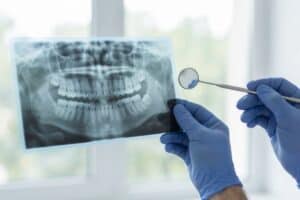
Dentists look for evidence of changes in the mouth. The American Dental Association lists pain near the wisdom teeth and repeated infection of the soft tissue behind the lower last tooth among the reasons for removal. Other signs relate to what a hard-to-reach tooth does to the gums and to the teeth beside it. The table below pairs each sign with what it may mean. Only a dentist can tell you which one applies to your mouth.
| Sign | What it may mean |
|---|---|
| Pain near the wisdom teeth | One of the reasons the American Dental Association lists for removal |
| Repeated infection of the soft tissue behind the lower last tooth | Another reason the American Dental Association lists for removal |
| Pain, swelling, or jaw stiffness around a partly erupted tooth | Bacteria can get into the gums and cause infection |
| Food trapped near a misaligned tooth | Trapped food feeds cavity-causing bacteria |
| Cavities that fillings cannot fix | A partly erupted tooth can lead to cavities that fillings cannot fix |
| Crowding or damage to neighboring teeth | A tooth without enough room can crowd or damage the teeth beside it |
| A cyst seen on an X-ray | An impacted tooth can form a cyst that may harm nearby tooth roots or destroy supporting bone |
Here is how each row plays out in real life. Pain near the wisdom teeth and repeated infection of the soft tissue behind the lower last tooth are the two reasons the American Dental Association lists most directly. Pain, swelling, or jaw stiffness around a partly erupted tooth may mean bacteria can get into the gums and cause infection. Food trapped near a misaligned tooth matters because trapped food feeds cavity-causing bacteria, and a partly erupted tooth can lead to cavities that fillings cannot fix. A tooth without enough room can crowd or damage the teeth beside it. Finally, an impacted tooth can form a cyst that may harm nearby tooth roots or destroy supporting bone, which is something an X-ray can reveal even when nothing hurts.
If you recognize one of these signs, the next step is a consultation, not a guess. Our extractions page explains how the practice approaches tooth removal in general, and during your visit you can ask whether your wisdom teeth can be treated in the office or whether a referral is needed.
What Is the Right Age for Wisdom Teeth Removal?
The Mayo Clinic notes that removal in young adults, generally ages 15 to 22, is typically safer and easier, with faster recovery, because the roots are not fully formed and the jawbone is less dense. For that reason, some young adults have their wisdom teeth pulled before the teeth cause problems.
Experts do not fully agree on this. The Mayo Clinic reports that some dental specialists recommend removing wisdom teeth even without symptoms, while others prefer to watch the teeth over time. The Mayo Clinic also states that it is not always easy to decide if or when wisdom teeth should be taken out, and that the choice is best made with a dentist. If you want a broader primer before you book, our overview of wisdom teeth removal is a good place to start.
What Recovery Looks Like After Wisdom Tooth Removal
Knowing the road ahead makes the decision easier. The Mayo Clinic describes recovery in stages, and your dentist’s own instructions always come first. In general terms:
- First 24 hours: Some oozing is normal. Eat only soft foods, avoid alcohol, caffeine, carbonated, and hot drinks, and skip brushing, rinsing, spitting, and mouthwash.
- Days 2 to 3: Cheek swelling usually improves, while bruising may take several more days to fade.
- First week: Avoid straws, strenuous activity, and tobacco, and rinse gently with warm saltwater every two hours and after meals.
- Stitches: If stitches are used, they typically dissolve within a few weeks.
- Around two weeks: Infection in the socket, a separate risk, usually appears around two weeks after the procedure.
One complication people often hear about is dry socket. It happens when the blood clot over the extraction site is dislodged, exposing bone and nerves, and the American Dental Association’s MouthHealthy site advises avoiding cigarette smoking and other tobacco use because tobacco can delay healing. The Mayo Clinic calls it a rare complication. If you suspect a lost clot, tell your dentist.
Some symptoms need a call right away. The Mayo Clinic advises contacting your dentist or oral surgeon for trouble swallowing or breathing, heavy bleeding, fever, severe pain that prescribed medicine does not relieve, swelling that gets worse after two or three days, a bad taste that saltwater rinsing does not remove, pus or fluid slowly leaking from the socket, lasting numbness, or blood or pus in nasal discharge.
Questions to Bring to Your Wisdom Teeth Consultation
Walking in with a short list makes the visit more useful. Consider asking:
- Are my wisdom teeth impacted, partly erupted, or fully grown in?
- Do you see any decay, gum problems, or cysts on the X-ray?
- Can my wisdom teeth be treated in your office, or do I need a referral?
- What are my options for sedation if I feel anxious?
- How will insurance, financing, or a payment plan apply to my visit?
Why Choose Dentistry For You When a Wisdom Tooth Flares Up
A wisdom tooth rarely picks a convenient day to act up. Swelling around a back molar or a sudden ache can show up on a Tuesday afternoon, and waiting a week for an opening is not what you want. Dentistry For You in Sand Springs, Oklahoma offers same-day emergency dentistry, so a flare-up can be evaluated quickly instead of left to get worse. The office is open Monday to Thursday, 8 am to 5 pm, so call early in the day if you are in pain.
Once you are in the chair, the practice uses digital X-rays and 3D imaging to see how a wisdom tooth sits in the jaw and how close it is to its neighbors, and an intra-oral camera lets you see what the dentist sees. Dr. Richard L. Brown Jr. earned his DDS from the University of Oklahoma, completed a one-year general dentistry residency, and spent five years in the U.S. Army. For patients who dread dental visits, sedation dentistry is available, and appointments can be scheduled in Spanish.
The practical details are covered too. The office is in-network with many insurance plans and files claims electronically, 0% patient financing is available subject to approval, and the Premier Care Plan is there for patients without insurance. New patient forms can be completed online or on a tablet in the office. Ask during your consultation whether your wisdom teeth can be treated in the office or whether a referral is the better path, and contact the practice for a free consultation.
Conclusion
A wisdom tooth does not have to hurt to be a problem, and it does not have to come out just because it exists. The right answer depends on whether the tooth is healthy, fully grown in, correctly positioned, and easy to clean, and an exam with an X-ray is the only reliable way to find out. If you notice pain, swelling, trapped food, or any of the signs in the table above, do not wait for a flare-up to force the decision. Reach out to the team for wisdom teeth removal Sand Springs, OK patients can rely on for a clear plan, and bring your questions with you.
Ready to find out where your wisdom teeth stand? Contact Dentistry For You in Sand Springs, OK today to schedule a free consultation.
Frequently Asked Questions About Wisdom Teeth Removal
Do wisdom teeth need to be removed if they do not hurt?
Not always. The Mayo Clinic says wisdom teeth may not need to be taken out if they are healthy, fully grown in, correctly positioned, biting properly, and can be cleaned daily. Teeth that stay should still get regular check-ups and periodic X-rays, since problems can develop later.
What is the best age to have wisdom teeth removed?
The Mayo Clinic notes that removal in young adults, generally ages 15 to 22, is typically safer and easier with faster recovery. Wisdom teeth usually emerge between the ages of 17 and 25, and the decision of when to remove them is best made with a dentist.
What happens if you do not remove wisdom teeth that need to come out?
An impacted wisdom tooth can damage neighboring teeth or lead to infection, and cysts or tumors can form around it. A partly erupted tooth can let bacteria into the gums, which may cause gum disease, infection, or cavities that fillings cannot fix.
How long does it take to recover from wisdom teeth removal?
Cheek swelling usually improves within two to three days, although bruising may take several more days. Stitches, if used, typically dissolve within a few weeks, and the first week calls for soft foods, gentle saltwater rinses, and no straws or tobacco.
What is dry socket after wisdom teeth removal?
Dry socket is a painful condition that can occur after a tooth is extracted. It happens when the blood clot over the extraction site is dislodged, exposing bone and nerves. Tobacco can delay healing, and a dentist can treat the site, so tell your dentist if you think the clot has been lost.

Sorry, the comment form is closed at this time.