

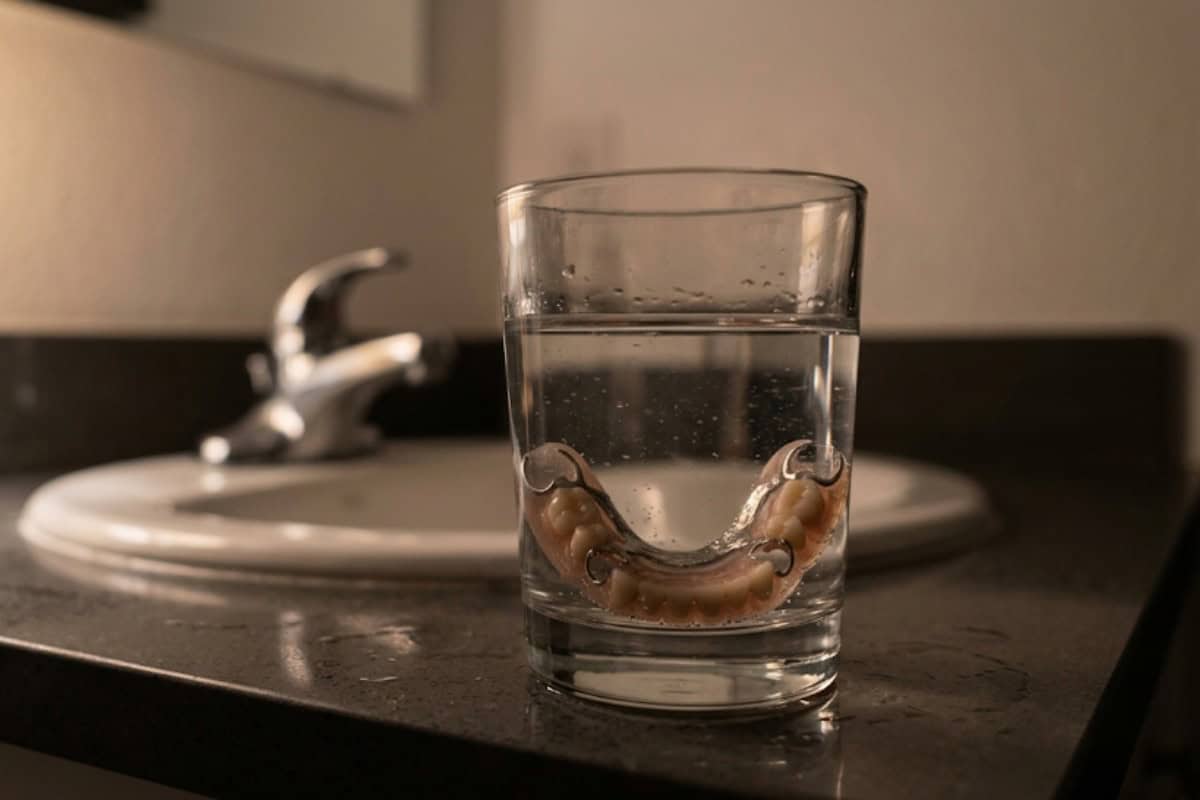
21 Sep Can You Sleep With Partial Dentures in Your Mouth?
A common misconception holds that partial dentures, like a retainer or a nightguard, are meant to stay in around the clock, but dental professionals recommend taking them out every night, and the American Dental Association specifically advises removing a partial denture before bed and putting it back in the following morning. That single mix-up sends a lot of people to bed wearing an appliance their gums actually need a break from. The honest answer to can you sleep with partial dentures in your mouth is that you technically can for a single night without major consequences, but making it a nightly habit is not good for your gum tissue, your jawbone, or the denture itself. If you’ve been leaving yours in every night because “it’s just easier,” this is the point where that habit is worth reconsidering.
The Truth About Sleeping in Your Partial Denture
The confusion is understandable. Partial dentures fit snugly, look natural, and after the adjustment period most people barely notice they’re wearing one. That comfort can create the impression that the appliance is safe to leave in indefinitely, the same way a person forgets they’re wearing contact lenses. But a partial denture is not attached to living tissue the way a natural tooth is. It rests on top of the gums and clasps onto remaining teeth, which means the soft tissue underneath it depends on regular exposure to air and saliva to stay healthy.
When a partial is left in overnight, that tissue stays covered and under light pressure for far longer than it is during the day. Saliva, which naturally rinses away food particles and helps control bacteria, can’t reach the covered gum surface the way it normally would. Multiply that by weeks or months of nightly wear, and small irritations that would otherwise resolve on their own start to compound.
Can You Sleep With Partial Dentures in Your Mouth? Here’s What Actually Happens
Removing a denture at night isn’t just a cleaning ritual, it’s a physiological reset. According to Cleveland Clinic, taking dentures out for at least eight hours a day reduces bacteria buildup and supports jawbone health, since the tissue and bone underneath get a genuine break from constant pressure. Skip that break regularly, and a few predictable things start to happen.
First, moisture gets trapped between the appliance and the gum tissue for hours at a stretch. That warm, damp environment is exactly what yeast organisms like Candida prefer, and it’s a major contributor to a condition called denture stomatitis. Second, the gum ridge and the bone beneath it don’t get the pressure relief they need, and that ridge naturally changes shape over the years regardless of how well a denture is cared for. Third, plaque and mineral deposits build up faster on a denture that’s rarely given time to dry out and soak, which shortens the life of the appliance and can make clasps and adhesive perform less reliably.
None of this means an occasional night wearing your partial denture, say after a long trip when you forgot your case, will cause lasting harm. The concern is habitual, nightly wear over weeks and months.
Removing Your Partial at Night vs. Sleeping in It
Laid out side by side, the difference between nightly removal and nightly wear becomes easier to see. Beyond comfort, nightly wear is also tied to a higher chance of oral thrush, a Candida overgrowth infection that Mayo Clinic lists denture-wearing as a specific risk factor for, especially when dentures stay in overnight. The table below compares the two approaches across the areas that matter most for long-term oral health.
| Comparison Factor | Removing Partial Dentures at Night | Sleeping in Partial Dentures |
|---|---|---|
| Gum Tissue Rest | Gum tissue gets a genuine break from pressure for eight hours, and saliva can circulate normally over the area. | Tissue stays covered and compressed all night, with no break from pressure or reduced saliva flow. |
| Infection & Fungal Risk | Lower risk of denture stomatitis, since the appliance and gum tissue both get a chance to dry out and reset. | Higher risk of denture stomatitis, a Candida-related condition that affects up to 67% of denture wearers worldwide. |
| Bone & Ridge Health | Supports jawbone health by giving the gum ridge regular relief from constant pressure. | Constant pressure on a ridge that naturally changes shape over time, which can speed up the need for adjustment. |
| Adhesive & Appliance Wear | Soaking overnight in water or solution helps the denture hold its shape and clears built-up plaque. | Plaque and tartar build up faster on the appliance, and adhesive residue never fully clears. |
The pattern across every row points the same direction: the mouth, the bone underneath it, and the denture itself all do better with a nightly break. If your partial already feels loose or leaves sore spots by morning, that’s worth addressing sooner rather than later. Contact us to schedule a fit check before minor irritation turns into a bigger problem.
Signs Your Partial Denture Needs a Fit Check
A partial that fit perfectly at your last appointment won’t necessarily fit the same way a year later, since gum tissue and bone shape shift gradually over time. Some of these signs, especially redness or soreness under the appliance, can point to denture stomatitis rather than a simple fit issue, which is another reason not to ignore them. Watch for these signs that it’s time to have your partial evaluated rather than just adjusting your habits around it:
- Sore or tender spots that show up in the same place morning after morning
- Noticeable looseness, rocking, or clicking when you eat or talk
- A whistling sound or new difficulty pronouncing certain words
- Red, white, or irritated patches on the gum tissue under the appliance
- Needing more adhesive than you used to just to keep it in place
- Visible wear, cracks, or bent clasps on the denture itself
Any one of these on its own might seem minor, but together they usually mean the fit has shifted enough that a professional adjustment or reline will serve you better than trying to compensate at home.
Simple Overnight Care Habits That Protect Your Partial
Good nighttime habits do double duty: they protect your gum tissue and extend the life of the appliance. A few consistent habits make a real difference:
- Remove the partial denture before bed every night, not just occasionally
- Rinse it under water to clear loose food debris before soaking
- Soak it in a denture-safe solution or plain water overnight so it keeps its shape
- Brush the appliance gently with a soft or denture-specific brush, never regular toothpaste
- Rinse your mouth and brush any remaining natural teeth and gums before sleeping
- Avoid hot water, which can warp the denture’s plastic or metal components
For more habits that protect your smile between checkups, our guide to daily oral care routines pairs well with partial denture maintenance.
Why Choose Dentistry For You for Partial Denture Care
A partial denture is not a “fit it once and forget it” appliance. Gum tissue and the bone ridge underneath shift gradually, sometimes within months of getting a new partial, and general oral health guidance for adults notes that gums change shape over the years, which is exactly why the fit that felt perfect at delivery can start to feel tight in one spot and loose in another over time. Our approach centers on checking that fit at regular intervals rather than waiting for a patient to show up in discomfort, and on treating a sore spot or a rocking denture as something to adjust promptly instead of something to just get used to.
When a partial starts to loosen, the response isn’t automatically a brand-new appliance. Depending on what’s changed in the mouth, a reline that reshapes the underside of the denture to match the current contour of the gums is often enough to restore a secure, comfortable fit. For patients in Sand Springs, Oklahoma and the surrounding Tulsa, Jenks, and Claremore area, that means fewer surprises: a denture that fits today gets rechecked and adjusted as your mouth changes, rather than being left to cause irritation until the next scheduled cleaning. If you’re dealing with a sore spot, a partial that no longer sits right, or you’re simply due for an evaluation, reach out and we’ll take a look at what your mouth actually needs right now, not just what the original mold called for.
Conclusion
Sleeping in a partial denture once in a while will not ruin your smile, but making it a nightly routine works against the exact things that keep a removable appliance comfortable and your mouth healthy: rested gum tissue, a stable bone ridge, and a clean, well-shaped denture. Taking it out for eight hours a night, cleaning it properly, and having the fit checked when something feels off are small habits with an outsized payoff. If your partial has been feeling less secure lately, or you’ve simply been wearing it overnight out of convenience, now is a good time to get it looked at rather than waiting for discomfort to force the issue.
Ready for a Comfortable, Well-Fitted Partial Denture? Contact Dentistry For You to Schedule Your Evaluation
Frequently Asked Questions
Can you sleep with partial dentures in your mouth?
Leaving a partial denture in for one night occasionally is unlikely to cause lasting harm, but wearing it every night is not recommended. Continuous wear blocks saliva from reaching the gum tissue underneath, raising the risk of irritation and fungal overgrowth. Most dental professionals recommend removing it for eight hours nightly.
What happens if you sleep with dentures in every night?
Nightly wear can lead to denture stomatitis, a fungal condition that causes redness, swelling, or soreness under the appliance. It also speeds up plaque buildup on the denture and keeps the gum ridge from resting. Over time this can loosen the fit and require more frequent adjustments.
How many hours a day should partial dentures be left out?
A common guideline is at least eight hours daily, most easily done overnight. This lets gum tissue and the jawbone rest while saliva naturally cleans the mouth. The denture should soak during this time to help it hold its shape.
Can wearing dentures overnight cause a fungal infection?
Yes. Sleeping in dentures traps moisture and bacteria against the gums and limits saliva contact, both of which favor Candida overgrowth. This is known as denture stomatitis, one of the most common problems linked to prolonged denture wear.
Do partial dentures need to be removed every night, or just sometimes?
Nightly removal, not occasional removal, is the standard recommendation from dental professionals. It protects gum tissue, lowers fungal and bacterial risk, and helps track how your mouth changes over time. A single missed night is unlikely to cause harm, but it should not become routine.

Sorry, the comment form is closed at this time.