

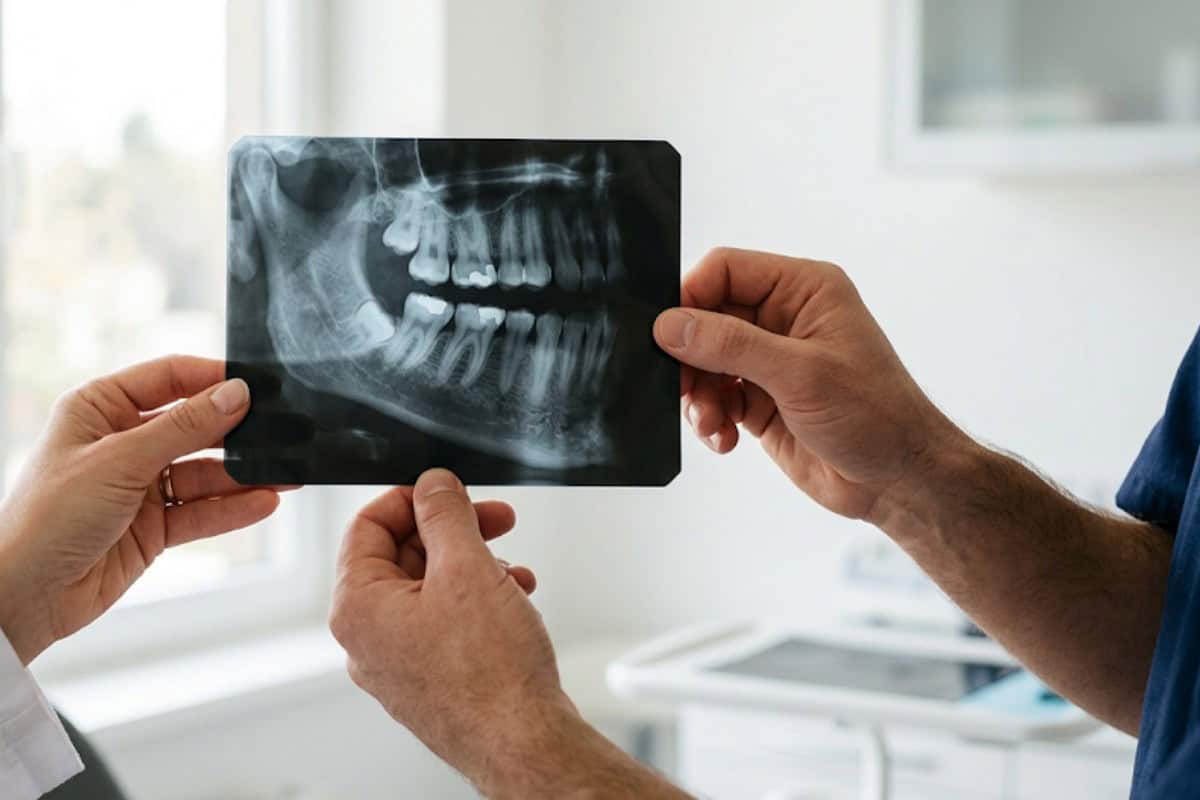
14 Sep Is It Bad to Leave a Gap After a Tooth Is Pulled?
The jawbone underneath a fresh extraction site can lose roughly half of its width within the first 12 months, and research tracking that process has found that about two-thirds of that shrinkage happens in just the first three months after the tooth comes out. That timeline is the real answer to whether it is bad to leave a gap after a tooth is pulled: waiting does not simply leave a cosmetic hole, it lets the ridge of bone that used to anchor the root begin changing shape while a decision gets put off. Nationally, adults between the ages of 20 and 64 already average 26 remaining teeth out of a full set of 32, according to federal tooth loss data, so a lot of people are living with at least one gap somewhere in their mouth. The question isn’t whether a gap is unusual. It’s what that particular gap is doing to the rest of the mouth while it sits open.
This matters just as much for a molar nobody sees when you smile as it does for a front tooth. The bone and the bite don’t know the difference.
What Happens to Your Jawbone When a Tooth Space Is Left Empty
A natural tooth root does more than chew. Every time you bite down, that root transmits pressure into the surrounding bone, and the bone responds to that pressure by staying dense and maintaining its shape. Pull the tooth, and that stimulation disappears from that one spot. The body reads the lack of pressure as a signal to stop maintaining bone it no longer needs, and the socket starts to remodel.
That remodeling is where the 50 percent figure comes from. Clinical research that measured the width of the bony ridge before and after extraction found that patients lost, on average, about half of that width over the course of a year, with the bulk of the change happening in the first three months while the socket is actively healing. Vertically, the ridge can also lose height, sometimes several millimeters, depending on how thick the bone and gum tissue were to begin with. None of this is visible from outside the mouth in the early weeks. It shows up later, as a sunken look along the gumline or as a denture or bridge that no longer fits the way it once did.
Cleveland Clinic lists bone loss in the jaw as a direct complication of untreated tooth loss, and notes that dentists routinely check how much bone has already been lost in an area before recommending a repair. That is not a scare tactic; it’s a diagnostic step, because the amount of remaining bone often determines which replacement options are still realistic. On the extraction side, it typically takes a few weeks for the socket itself to close over, though a full jaw-healing timeline can run longer for a molar than for a smaller front tooth.
Beyond the Bone: What Else Changes When a Gap Is Left Open
Bone isn’t the only thing that moves. The teeth next to an empty socket tend to drift toward the open space over time, tipping rather than staying upright, and the tooth in the opposite jaw that used to bite against the missing one can gradually shift downward or upward looking for something to meet. ADA MouthHealthy notes plainly that remaining teeth may shift and that bone loss can occur around a missing tooth, and that even a back molar nobody sees can affect how a person chews.
Once teeth have tilted or drifted, the bite itself changes. Chewing can become less efficient on that side, which sometimes pushes people to favor the other side of their mouth, and an uneven bite can eventually contribute to jaw discomfort. None of this happens overnight. It is a slow drift measured in months, which is exactly why it is easy to underestimate at the six-week follow-up when the extraction site finally feels comfortable again.
Comparing Your Real Options for the Gap
There is no single “right” choice for every gap, but the options fall into four categories, and they behave very differently over time. The table below lays out how a dental implant, a fixed bridge, a removable partial denture, and simply leaving the space open compare on timeline, permanence, and what each one does to the bone and the teeth around it.
| Option | Typical Timeline | Permanence | Effect on Adjacent Teeth & Bone |
|---|---|---|---|
| Dental Implant | Several months from placement to a finished tooth, since the implant needs time to fuse to the jawbone before a crown is attached | Built as a long-term, standalone replacement; often the longest-lasting of the standard options | Replaces the tooth root itself, which can help maintain bone at that site; does not require reshaping neighboring teeth |
| Fixed Bridge | Usually completed over a few appointments within several weeks | Average lifespan of 5 to 15 years before it may need to be redone | Anchors onto the two neighboring teeth, which must be reshaped to hold the crowns; does not replace the root, so bone loss at the gap can continue |
| Removable Partial Denture | Typically fabricated and fitted within a few weeks | Average lifespan of 7 to 10 years | Rests on the gum and clips onto nearby teeth rather than replacing the root; fit often needs adjusting as the bone beneath it changes shape |
| Leaving the Gap Open | No procedure, but change begins immediately and continues for months and years | Not a stable outcome; the space and the bite keep changing over time | Neighboring teeth can tilt into the space and the opposing tooth can shift out of position, while the bone continues to change shape at the site |
A few of these numbers are worth repeating in plain language, since they’re the ones that actually drive the decision. A fixed bridge lasts an average of 5 to 15 years, and a partial denture averages 7 to 10 years, while an implant is generally described as the longest-lasting of the group because it replaces the root and not just the visible tooth. The implant treatment stages described by Mayo Clinic, extraction, bone healing, implant placement, and finally the crown, explain why that option takes the longest of the four to finish, even though it tends to hold up the longest afterward. A bridge also requires reshaping two healthy neighboring teeth to hold it in place, which is a real trade-off worth discussing with your dentist before committing to that route over an extractions follow-up plan built around a different option.
Signs the Gap Might Already Be Causing a Problem
A few practical signs tend to show up before a patient notices anything in the mirror. If any of these sound familiar, it’s worth having the area evaluated sooner rather than later:
- Food regularly gets packed into the space or into a widening gap next to it
- A tooth near the extraction site looks like it’s leaning or tipping toward the gap
- Chewing on that side feels different, weaker, or slightly uncomfortable compared to the other side
- A denture or partial that used to fit snugly has started to feel loose or rock slightly
- It has been longer than a few months since the extraction and no replacement plan has been discussed
None of these signs mean something has gone wrong. They mean the timeline described earlier is already in motion, and it’s a reasonable point to get the site checked before more bone or tooth position is lost.
Why Choose Dentistry For You for Extraction Planning
Every extraction site is different, and the plan for what comes next depends on things like which tooth was removed, how much bone is present, and whether the site is healing on schedule. Rather than treating “fill the gap” as a single step, the more useful way to think about it is as a short sequence of decisions made in order.
The first decision happens close to the extraction itself: is this a site where preserving the shape of the socket now makes sense, so that more bone is available if an implant is the eventual plan, or is the priority simply getting the area to heal cleanly first. The second decision is timing. Some patients are candidates to move toward a permanent replacement fairly soon after extraction, while others need a longer healing window, often several months, before the bone and gum tissue are ready to support the next step. The third decision is what, if anything, bridges the gap in the meantime, since a visible front tooth and a lower back molar usually call for different answers to that question.
For patients across Sand Springs and the surrounding Tulsa, Jenks, and Claremore area, that planning conversation happens before the socket has fully closed, not months later when a replacement is finally being considered for the first time. Mapping out the timeline early gives a patient time to ask questions, compare the options in the table above against their own schedule and priorities, and avoid making a rushed decision under pressure. If a permanent replacement like an implants consultation is the likely next step, knowing that early also affects how the extraction site itself is managed from day one.
If you’re weighing these options after a recent or upcoming extraction, our contact page is the fastest way to get a specific timeline for your situation rather than a generic one. If it has already been years since the extraction, we’ve covered that exact scenario on our blog as well.
Conclusion
A gap left after an extraction is never really standing still. The bone underneath it can lose roughly half its width in the first year, with most of that change happening in the first three months, and the teeth around it can drift or shift while a decision gets postponed. None of the four paths, implant, bridge, partial denture, or waiting, is automatically wrong for every patient, but each one behaves differently on a clock that starts the day the tooth comes out. The sooner that clock is factored into the plan, the more options usually remain on the table. If it has been a while since your extraction and you’re still not sure which direction makes sense, reach out and get the site evaluated before more changes happen underneath the surface.
Ready to Talk Through Your Options? Contact Dentistry For You to Schedule a Consultation
Frequently Asked Questions
Is it bad to leave a gap after a tooth is pulled?
Yes, in most cases an open gap allows the surrounding bone to shrink and gives neighboring teeth room to shift or tilt over time. The longer the space stays empty, the more those changes tend to add up, which can make replacement more complicated later.
How long can you wait before replacing a missing tooth?
There is no universal deadline, but most of the bone changes associated with an empty socket happen within the first several months after extraction. Waiting longer doesn’t make replacement impossible, but it can mean more bone has already changed shape by the time a replacement is planned.
What happens if you don’t replace an extracted tooth?
Nearby teeth can drift or tilt into the open space, the opposing tooth can shift out of its normal position, and the jawbone in that area can gradually lose density and volume. Chewing efficiency on that side of the mouth can also decline over time.
Will my teeth shift if I leave a gap?
Yes, it’s common for teeth adjacent to an empty socket to lean or drift toward the space, since they no longer have a neighboring tooth holding them in position. The tooth directly across from the gap in the opposite jaw can shift as well.
Do you need a bone graft if you wait too long after an extraction?
Not always, but the more bone volume that is lost while a gap sits open, the more likely a bone graft becomes if a dental implant is later chosen as the replacement. Getting the site evaluated sooner keeps more options available without requiring additional bone-building procedures.

Sorry, the comment form is closed at this time.